Cobb Can Move Walkthrough
Cobb Can Move is a top-down pixel-art dungeon puzzle game. You control a small figure called Cobb through a series of stone rooms, pushing coal crates into a burning furnace to clear each one. There is no combat, no timer and no inventory. You walk, you push, you reach the goal.
What follows is a tour of the game's real in-game frames, plus the practical details that matter when you sit down to play it: which keys move Cobb, what the on-screen counter tracks, and the crate-pushing rules that decide whether a room is easy or genuinely fiddly. Nothing here is invented - every screenshot below comes from the playable build. More games are listed on the games page.
The Title Screen Sets The Tone
The game opens on a logo screen: the words COBB CAN MOVE stamped over a grey stone wall, with a red hooded figure wearing a black eye mask above it and fire burning along the bottom edge. It is a deliberately plain, retro-styled title card, and it sets up exactly how the rest of the game plays - grim palette, simple shapes, no decoration that does not earn its place.
From here you go straight into the dungeon. There is no story screen, no prologue text and no account prompt. The game is the dungeon.

The First Room Teaches You The Controls
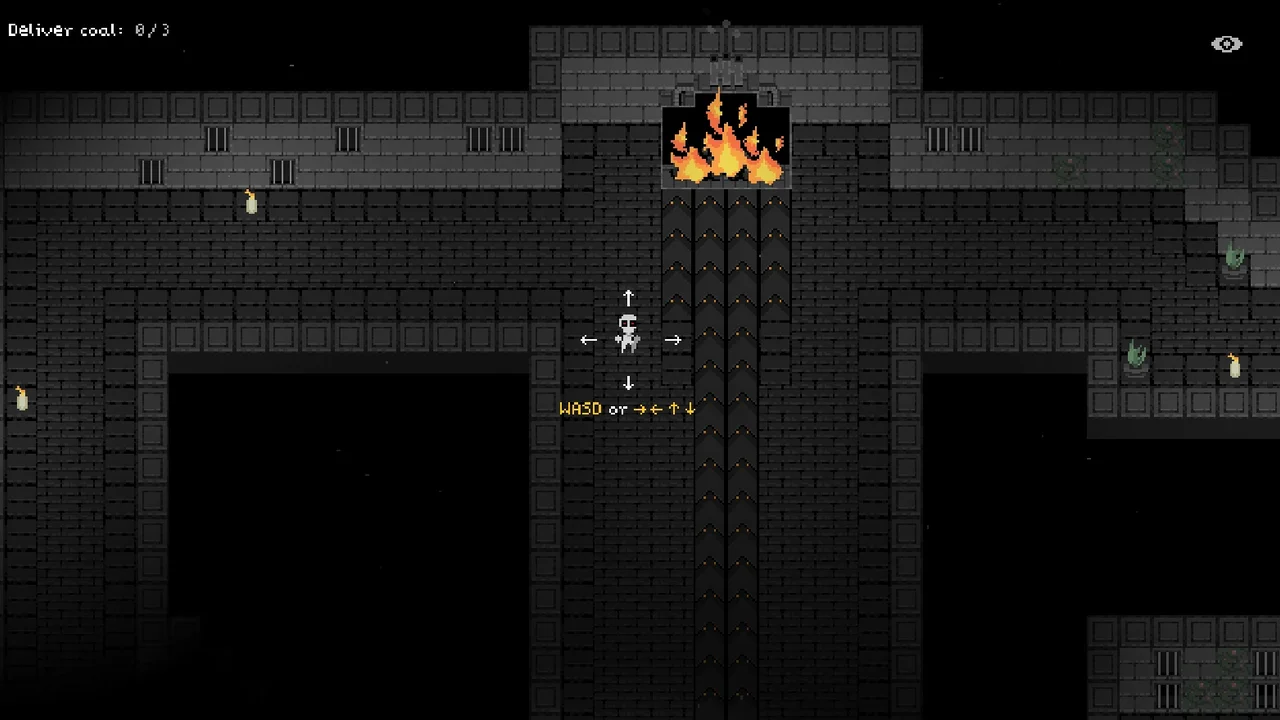
The opening room is a wide grey hall with barred cells along the walls and a furnace burning at the far end. Four tiles in front of the furnace are marked with chevron arrows pointing at the fire, and Cobb starts partway down the hall. The counter in the top-left corner reads Deliver coal: 0/3, which is the whole objective in one line: this room needs three crates.
The game draws its own tutorial on screen. Arrow keys surround Cobb's sprite and the text below reads WASD or ↑↓←→. That is the complete control scheme. There is no separate move button, no dash and no grab key - you push by walking into a crate.
Reading A Room Before You Touch Anything
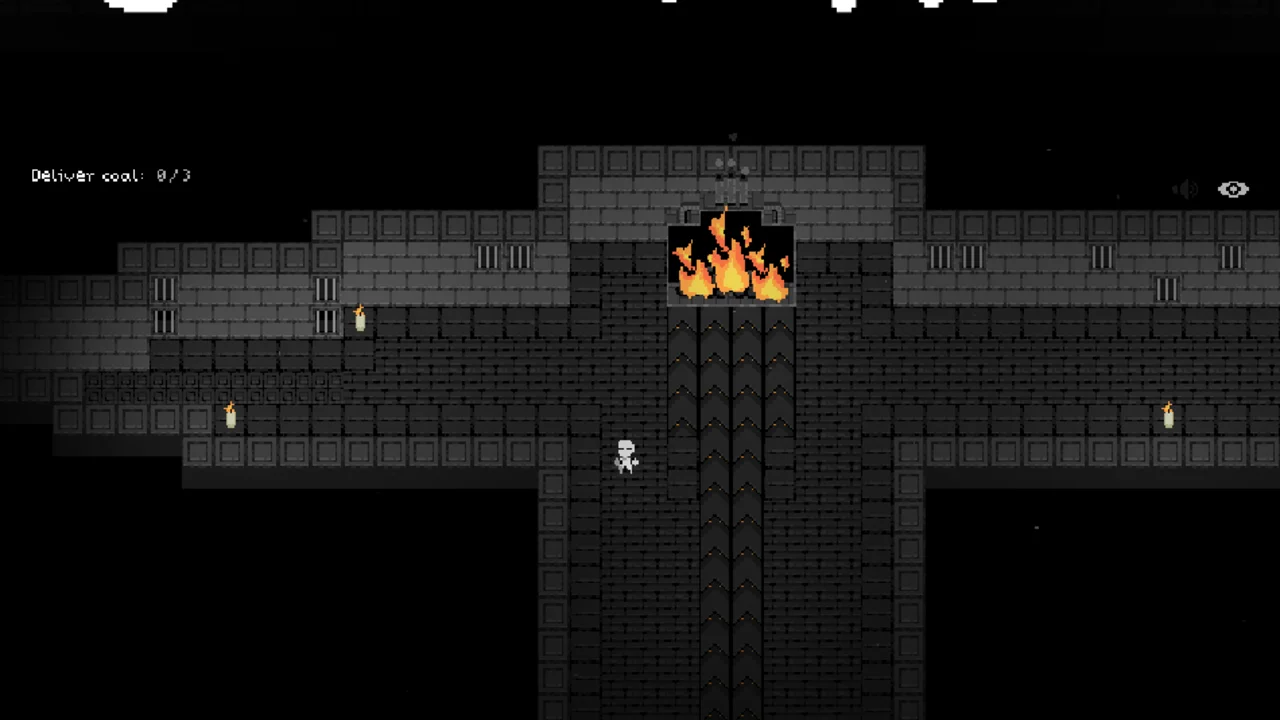
Later rooms get wider and messier, but the language stays the same. Grey brick is walkable floor, barred rectangles are cells you cannot enter, the lit furnace is the goal, and the chevron tiles show the approach it wants. Everything else - crates, stones, columns - is something you either push or walk around.
Spend a few seconds looking before you start moving. Count how many crates the counter wants, work out which ones are reachable, and check whether a crate will have to be parked against a wall to get it past a corner. Most rooms solve themselves once you have seen the shape of the floor.
Tips before you start
- Move with
WASDor the arrow keys - that is the whole control scheme, and the game shows it to you on the first room. - Crates push but never pull. Once you commit a crate to a direction, you cannot walk backwards and drag it with you.
- Plan the whole route before the first push. If a crate needs to turn a corner, remember you have to walk around the outside of it to change its direction.
- Use the
Deliver coal: n/mcounter in the top-left to confirm what the room actually wants - later rooms ask for more than three. - Play in fullscreen from the page. On a phone the tiles get small, and the whole game depends on judging a grid precisely.
Built from the game's real in-game captures - scene tour and tips, no invented plot.