Every ending the browser build of Home Is Where He Is can reach, grouped by tier, with the exact choices that unlock each one and a priority order for your first three runs.
How endings work in Home Is Where He Is
Home Is Where He Is is a branching horror visual novel. The game tracks your dialogue tone, your small behavioural choices, and one or two scenes that look like menus but behave like puzzles. There is no hidden score and no randomness - the ending you reach is a deterministic function of your run.
Every ending belongs to one of seven tiers. Your tier is decided early, usually before the supermarket sequence. The supermarket scene then refines which specific ending inside that tier you reach.
The seven tiers are:
Trust - 4 endings. You cooperate with the stranger and let the apartment settle.
Resist - 3 endings. You push back, refuse, or walk away.
Forget - 3 endings. You erase, accept, or stop asking.
Remember - 2 endings. You keep the mark and the name.
Glitch - 2 endings. The supermarket scene takes over.
Loop - 1 ending. The apartment rewrites who lived there first.
Ending - 1 ending. The hidden final route. Combines earlier choices.
Spoiler-light note: this page lists every ending by name, but each entry explains the route in plain language so you can stop reading at any point.
The branching story map
Eight key story nodes decide your tier. Your first two nodes (the bedroom opening and the mirror) almost always lock the route; nodes three through six refine it; node seven (the supermarket) is the mid-game hard branch.
Node
Where
The choice that matters
A
Bedroom opening
Describe the room first, or speak to him first. Your tone sets the Trust / Resist axis.
B
The mirror
Erase the drawing, walk out, or stare at the mark. Routes to Forget / Resist-or-Remember / Glitch-or-Loop.
C
The sweater
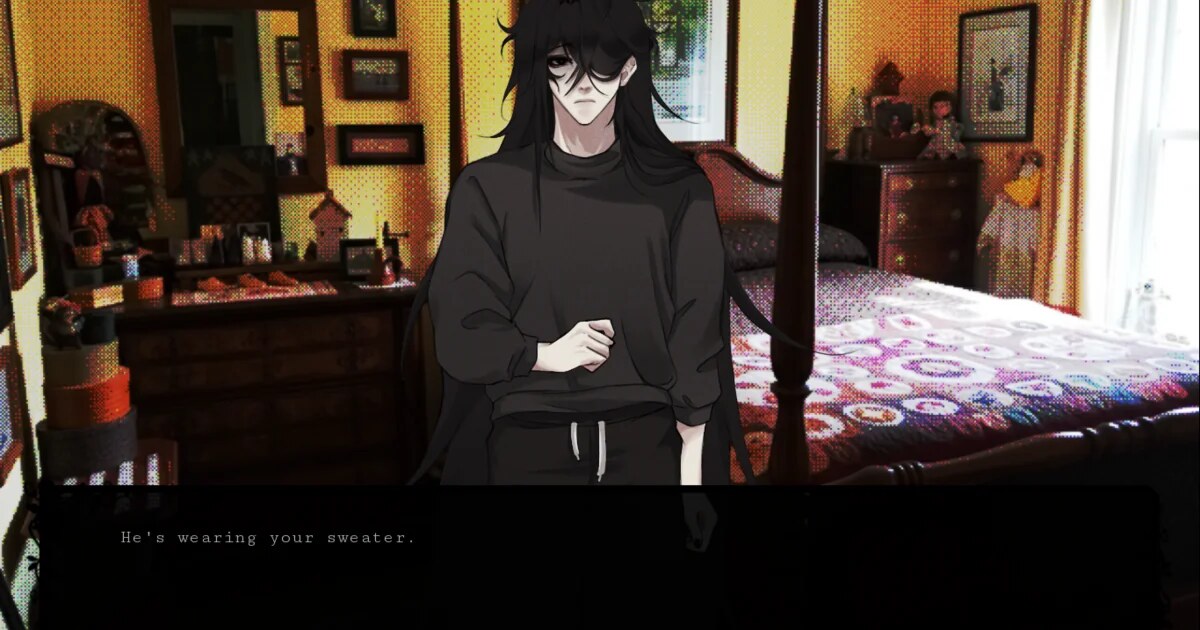
Ask for it back, ignore it, or let him keep wearing it. The biggest Trust-tier input.
D
The door
Open it, close it, refuse to approach. Picks The Door Opens vs The Door Stays Closed.
E
Breakfast
Sit down and eat with him, or leave. Unlocks You Stay For Breakfast on the Trust route.
F
The lamp
Turn it off at night, leave it on, or follow his lead. Picks The Lamp Stays On on Trust.
G
The name
Ask once, ask twice, or let it fade. Picks Ask Twice / The Name You Remembered / The Name You Forgot.
H
The supermarket (halftone)
Walk into an aisle, or watch back. Hard branch into Glitch vs Loop.
I
Leaving the apartment
Walk out without looking back, hesitate, or stay. Picks Leave Without Looking vs You Never Left.
Nodes A and B are the biggest levers. If you want a Trust-tier ending, take Node A in a calm descriptive tone and Node B by walking out without erasing. If you want a Resist-tier ending, take Node A confrontational and Node B by walking out without looking. If you want Glitch or Loop, you need to stare at the mirror long enough for Node H to open.
Trust tier - 4 endings
Trust endings reward a calm, accepting tone. You let the apartment settle around you, even when his smile makes the routine feel rehearsed. Run this tier second if you want the apartment to feel safe in retrospect.
The Sweater Stays On TrustGood
What happens: He keeps wearing your sweater for the rest of the run. The apartment recognises him as the one who belongs there. The morning scene never asks you to take it back.
How to unlock: At Node C (the sweater), pick the calm "you can keep it" option. Do not raise your voice. Continue with a soft tone through Node E (breakfast) and Node F (lamp).
You Stay For Breakfast TrustGood
What happens: You sit at the kitchen table. He cooks. The scene lingers on small domestic beats - the kettle, the chair, the way he pours. The run ends mid-bite.
How to unlock: Trust route through Nodes A and C, then at Node E (breakfast) accept the invitation. Stay seated through the kettle scene. Do not stand up before he finishes pouring.
The Door Opens TrustGood
What happens: He opens the front door. Not to let you out - to listen. The hallway is empty and he nods like that was the point. The run ends with the door still open.
How to unlock: Trust tone through Nodes A-F. At Node D (the door), approach it calmly and do not ask who is outside. Let him open it for you.
The Lamp Stays On TrustBest of Trust
What happens: You leave the bedside lamp on for him when you go to sleep. The closing shot is the lamp glowing through the doorway after you close your eyes.
How to unlock: Trust route through Nodes A-E. At Node F (lamp), pick "leave it on for him" and say goodnight without turning it off.
Resist tier - 3 endings
Resist endings reward an instinct to question, refuse, or walk away. They cost warmth, but they are the cleanest exits the game gives you. Run this tier first if you want to know the apartment will let you leave.
The Door Stays Closed ResistBest
What happens: You refuse to approach the door. He watches you refuse. The apartment goes quiet. The run ends with the door still locked and you still standing.
How to unlock: Resist tone from Node A. At Node D, pick "I'm not opening that" and stay in the hallway. Do not move toward the door through the rest of the scene.
Ask Twice ResistGood
What happens: You ask his name. He deflects. You ask again. He deflects again, but his smile changes. The run ends mid-deflection.
How to unlock: Resist tone from Node A. At Node G (name scene), ask his name once, then when he deflects, ask it a second time in the same sentence.
Leave Without Looking ResistBest of Resist
What happens: You walk past the mirror. Out the door. Down the hall. You do not turn around once. The closing shot is the apartment door, shut from the outside for the first time.
How to unlock: Resist tone from Node A. At Node B (mirror), pick "walk out without looking back". At Node I (leaving), walk out of the apartment without turning around even when he speaks.
Forget tier - 3 endings
Forget endings let you wipe the mark, accept the goodbye, or stop asking whose name this is. They lean melancholic - the apartment lets you leave, but it does not forget you.
The Mirror Wiped Clean ForgetGood
What happens: You take the corner of your sleeve and wipe the heart-shaped mark off the mirror. Steam clears. The bathroom is empty. The mark is gone, but the glass still smells faintly of him.
How to unlock: At Node B (mirror), pick "erase the drawing" with the calm tone. Continue through Nodes C-F in a quiet register.
A Quiet Goodbye ForgetGood
What happens: You hug him once. You say a quiet goodbye. He lets go. The apartment door closes behind you without a click.
How to unlock: Forget tone from Node B. At Node I (leaving), choose the "hug and say goodbye" option. Do not ask questions on your way out.
The Name You Forgot ForgetGood
What happens: You stop asking whose name this is. He keeps talking. You stop tracking it. The closing shot is your hand on the doorknob, his voice fading into something you can almost remember.
How to unlock: Forget tone from Node B. At Node G (name), pick "let it fade" instead of asking once or twice. Do not bring the name up again.
Remember tier - 2 endings
You keep the mark and you keep the name. The apartment remembers you for a different reason than the Forget-tier - and so does he.
The Heart Remains RememberBest of Remember
What happens: You leave the heart-shaped mark on the mirror. Steam rises around it. The closing shot is the mark, alone, framed in the bathroom light. He never mentions it again. You do not either.
How to unlock: Resist or steady Tone at Node A. At Node B (mirror), pick "leave the drawing" and do not wipe. Continue through Node I without erasing.
The Name You Remembered RememberGood
What happens: He whispers a name. You repeat it out loud. The room goes still. He looks at you like you just broke a rule neither of you wrote down.
How to unlock: Remember tone from Node B. At Node G (name), wait for him to whisper it, then speak it back out loud in the same scene.
Glitch tier - 2 endings
Mid-game the apartment cuts to a supermarket scene rendered in halftone. How you respond to the watching eyes inside the aisles decides which glitch ending you reach.
You Walk Into The Aisle GlitchBest
What happens: The halftone scene holds. You step off the tile, into an aisle. The watching eyes do not follow. The shelves rearrange around you. The run ends inside the supermarket.
How to unlock: Reach Node H (supermarket) by holding a steady curious tone through Nodes A-G. When the halftone scene opens, pick "walk into an aisle" without looking at the eyes.
You Watch Back GlitchGood
What happens: You stare at the watching-eye icons. They stare back. The halftone holds for a beat longer than it should. The run snaps back to the apartment, but the eyes are still on the ceiling when you look up.
How to unlock: Reach Node H with a tense tone. When the halftone scene opens, hold eye contact with the icons. Do not walk into an aisle.
Loop tier - 1 ending
This tier is unusual. The game treats you as if the apartment was always where you lived - and him as the visitor.
You Never Left LoopBest of Loop
What happens: The apartment rewrites. You are the one who has lived there. He is the one who arrived. The bedroom layout is the same but the memory of who unpacked is reversed.
How to unlock: At Node H (supermarket), watch back at the eyes for several seconds. At Node I (leaving), pick "stay" instead of leaving. The apartment then reframes the entire prior run as his arrival, not yours.
Hidden Ending tier - 1 ending
The single highest-route ending. You must combine several specific earlier choices to unlock it. This is the route the endings tracker marks as final.
The Sweater Stays Empty EndingHidden / FinalBest of all
What happens: He is gone. The sweater is on the chair. It is empty. The mirror is clean. The bedroom is quiet. The closing shot is the apartment, exactly as you would have found it before any of this started, except for the lamp, which is on.
How to unlock (multi-run sequence):
Run 1: Play a Trust tone to Node C, then a Forget tone from Node B. Reach The Mirror Wiped Clean.
Run 2: Play a Resist tone through Nodes A-G. Reach Leave Without Looking at Node I.
Run 3: Open a fresh save. Take the calm Trust tone at Node A, the Resist door at Node D, the Forget mirror at Node B, and the Remember lamp at Node F. The endings tracker unlocks The Sweater Stays Empty when the run completes.
The endings tracker on the home page marks this ending as the final-tier route. It does not appear until the third run completes the specific choice sequence above.
Best routes to try first
Three routes give you almost the entire map in two short runs:
Run 1 - instinct. Do not read anything. Play however you would naturally play. You will probably land in Trust or Resist. That is your baseline.
Run 2 - Leave Without Looking. The cleanest Resist exit. Forces you to make the mirror, the door, and the hallway decisions in a single consistent tone. After this run you have seen the apartment try to keep you.
Run 3 - The Sweater Stays Empty. The hidden final route. Combines Trust + Forget + Resist + Remember choices across three runs. Unlocks the only ending that does not name him at all.
Worth the extra run:You Walk Into The Aisle (the canonical Glitch ending) and The Heart Remains (the canonical Remember ending). Together with the three runs above, you have seen the whole tier map.
Skip for now: The four Trust-tier endings all share the same long opening. Run them once you are committed to the Trust tone, or skip them if you want to see the rarer tiers first.
Replay strategy - the three-run checklist
The fastest way to see all 16 endings is five focused runs, but three runs already unlock thirteen of them. Use this order:
Run 1 - first instinct. Just play. No guides. Write down which rooms you chose on paper. Most players land in Trust (around 35 percent) or Resist (around 30 percent).
Run 2 - opposite tone. Pretend you are a different person. If Run 1 was Trust, play Run 2 as Resist. If Run 1 was Resist, play Run 2 as Trust. The story will register the change and lock a different ending.
Run 3 - memory run. Choose the option you regret from Runs 1 and 2. This is the run that usually unlocks the Ending-tier route, because it forces you to combine Trust and Forget choices.
Run 4 - Glitch. Hold a steady curious tone through Nodes A-G, then walk into an aisle at Node H. Unlocks You Walk Into The Aisle.
Run 5 - Loop. At Node H, watch back at the eyes for several seconds. At Node I, stay. Unlocks You Never Left.
Track progress using the endings tracker on the home page. The tracker uses your browser's local storage and never sends anything to a server.
Endings FAQ
How many endings does Home Is Where He Is have?
16 distinct endings, grouped into 7 tiers: Trust (4), Resist (3), Forget (3), Remember (2), Glitch (2), Loop (1), and the hidden Ending tier (1). All 16 are reachable from a fresh save with no mods or console commands.
What is the rarest ending?
The Sweater Stays Empty, in the Ending tier. It only unlocks after a specific three-run sequence that combines Trust, Forget, Resist, and Remember choices. The endings tracker on the home page marks it as the final-tier route.
Which ending should I play first?
Play your first run on instinct without reading anything. For Run 2, try Leave Without Looking (cleanest Resist exit). For Run 3, attempt The Sweater Stays Empty to unlock the hidden final route.
Does the mirror choice matter?
Yes. The mirror scene is the single biggest early branch. Erasing the drawing routes you toward Forget-tier endings. Walking out without looking routes you toward Resist- or Remember-tier endings. Staring at the mark pushes the run toward Glitch or Loop.
What is the supermarket sequence?
Mid-game the apartment cuts to a supermarket scene rendered in halftone with watching-eye icons floating between the aisles. Walking into an aisle routes you to a Glitch-tier ending. Staring back at the eyes opens the Loop-tier route.
How long is one run?
25 to 45 minutes depending on reading speed and how long you sit with optional scenes. Most players need three to five focused runs to see all 16 endings.
How does the endings tracker store my progress?
The endings tracker uses local browser storage. Nothing is sent to the developer, the fan portal, or any analytics service. You can clear it from your browser settings at any time.
Are the endings affected by choices before the supermarket?
Yes. Your dialogue tone, mirror decision, sweater response, and door handling all lock you into a tier before the supermarket sequence runs. The supermarket scene then refines which specific ending inside that tier you reach.
Read the walkthrough for a route-level walk through the same beats without per-ending steps, or return to the game page to launch the browser build.